




Month: April 2026
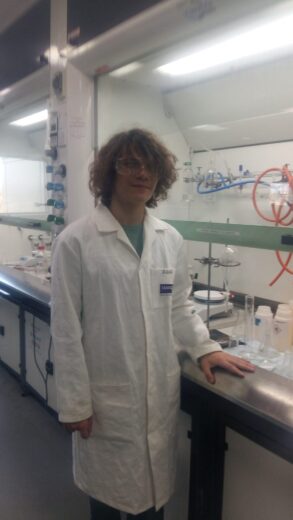
 We are pleased to share news of OS Egor Zaytsev’s recent academic achievement, which marks an important step in his mathematical career.
Egor showed a strong interest and ability in mathematics during his time at Sedbergh, where he was encouraged to develop his skills. In 2015, he gained recognition in the UK Mathematics Trust Intermediate Challenge. These early experiences, supported by good teaching and encouragement, helped build the foundation for his later studies.
It is worth mentioning the guidance and mentorship from Dr A D P Worgan, (Chemistry Teacher), who played an important role during Egor’s school years and once said we would “hear Egor’s name again one day.”
That prediction has certainly proven true. On 31st March 2026, the Bulletin of the London Mathematical Society published Egor’s work on the Fractional Residue Theorem. In simple terms, his result offers a more direct way of evaluating certain complex integrals and adds a useful new perspective to a well-established area of mathematical analysis. Although Egor does not hold a maths degree (he did an integrated master’s in chemistry in the University of Manchester for 4 years, and then the PGCE in Oxford), he is currently a maths teacher and the paper published was based on the ideas he came up with while trying to come up with some more interesting problems for his highest attaining students.
It is rewarding to see how ideas first explored at school have developed into published research. Egor’s journey is a good example of how early curiosity, when supported, can grow into meaningful academic work at the highest level.
Congratulations to Egor on this impressive achievement. We look forward to seeing what comes next in his mathematical work.
We are pleased to share news of OS Egor Zaytsev’s recent academic achievement, which marks an important step in his mathematical career.
Egor showed a strong interest and ability in mathematics during his time at Sedbergh, where he was encouraged to develop his skills. In 2015, he gained recognition in the UK Mathematics Trust Intermediate Challenge. These early experiences, supported by good teaching and encouragement, helped build the foundation for his later studies.
It is worth mentioning the guidance and mentorship from Dr A D P Worgan, (Chemistry Teacher), who played an important role during Egor’s school years and once said we would “hear Egor’s name again one day.”
That prediction has certainly proven true. On 31st March 2026, the Bulletin of the London Mathematical Society published Egor’s work on the Fractional Residue Theorem. In simple terms, his result offers a more direct way of evaluating certain complex integrals and adds a useful new perspective to a well-established area of mathematical analysis. Although Egor does not hold a maths degree (he did an integrated master’s in chemistry in the University of Manchester for 4 years, and then the PGCE in Oxford), he is currently a maths teacher and the paper published was based on the ideas he came up with while trying to come up with some more interesting problems for his highest attaining students.
It is rewarding to see how ideas first explored at school have developed into published research. Egor’s journey is a good example of how early curiosity, when supported, can grow into meaningful academic work at the highest level.
Congratulations to Egor on this impressive achievement. We look forward to seeing what comes next in his mathematical work.
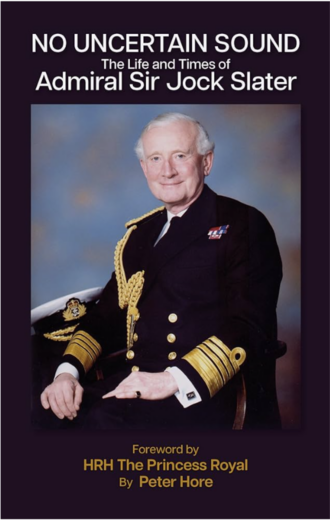
 No Uncertain Sound: The Life and Times of Admiral Sir Jock Slater by Peter Hore has been warmly received across the UK as both an engaging biography and an important contribution to modern naval history. Carefully researched and vividly written, the book charts Sir Jock’s distinguished career, culminating in his appointment as First Sea Lord from 1995 to 1998.
Reviewers have praised the work for shedding light on a crucial but often overlooked period for the Royal Navy in the 1990s. Through Sir Jock’s experiences, readers gain insight into significant changes in defence policy and naval life after the Cold War, including the introduction of women serving at sea, the ending of restrictions on gay personnel, and the Navy’s closer operational alignment with the Royal Marines.
The Naval Review described the book as a “well-crafted biography” and a “masterly slice of contemporary naval history,” while other commentators have highlighted its readability and balance. Peter Hore’s style has been noted for combining serious historical analysis with warmth and humour, making the book accessible to specialists and general readers alike.
The book has also enjoyed a positive public reception, receiving strong early ratings and praise for blending personal recollection with strategic context.
For anyone interested in leadership, defence policy, or the modern history of the Royal Navy, No Uncertain Sound is proving to be essential reading.
To purchase a copy of the book please visit this link : https://www.amazon.co.uk/dp/1849956138
No Uncertain Sound: The Life and Times of Admiral Sir Jock Slater by Peter Hore has been warmly received across the UK as both an engaging biography and an important contribution to modern naval history. Carefully researched and vividly written, the book charts Sir Jock’s distinguished career, culminating in his appointment as First Sea Lord from 1995 to 1998.
Reviewers have praised the work for shedding light on a crucial but often overlooked period for the Royal Navy in the 1990s. Through Sir Jock’s experiences, readers gain insight into significant changes in defence policy and naval life after the Cold War, including the introduction of women serving at sea, the ending of restrictions on gay personnel, and the Navy’s closer operational alignment with the Royal Marines.
The Naval Review described the book as a “well-crafted biography” and a “masterly slice of contemporary naval history,” while other commentators have highlighted its readability and balance. Peter Hore’s style has been noted for combining serious historical analysis with warmth and humour, making the book accessible to specialists and general readers alike.
The book has also enjoyed a positive public reception, receiving strong early ratings and praise for blending personal recollection with strategic context.
For anyone interested in leadership, defence policy, or the modern history of the Royal Navy, No Uncertain Sound is proving to be essential reading.
To purchase a copy of the book please visit this link : https://www.amazon.co.uk/dp/1849956138
 The 2026–27 academic year will mark the 25th anniversary of co-education at Sedbergh School, and we are keen to celebrate this significant milestone in the School’s history.
OS who left Sedbergh between the summer of 2003 to the summer of 2025 are cordially invited to an OS Leavers Reunion Dinner at Browns Brasserie & Bar Covent Garden on Friday 20th November 2026.
The Dinner includes a welcome drink on arrival at 6.30pm, followed by a three-course meal with a drink (further drinks can be purchased at the bar).
Due to the limited capacity at the venue and expected demand we are unfortunately unable to accommodate partners/guests on this occasion.
Tickets are free of charge. Please book here.
We look forward to seeing you on the 20th November!
The 2026–27 academic year will mark the 25th anniversary of co-education at Sedbergh School, and we are keen to celebrate this significant milestone in the School’s history.
OS who left Sedbergh between the summer of 2003 to the summer of 2025 are cordially invited to an OS Leavers Reunion Dinner at Browns Brasserie & Bar Covent Garden on Friday 20th November 2026.
The Dinner includes a welcome drink on arrival at 6.30pm, followed by a three-course meal with a drink (further drinks can be purchased at the bar).
Due to the limited capacity at the venue and expected demand we are unfortunately unable to accommodate partners/guests on this occasion.
Tickets are free of charge. Please book here.
We look forward to seeing you on the 20th November!
Old Sedberghians, parents and friends of the School are warmly invited to attend the OS Scottish Lunch at The New Club in Edinburgh on Friday 6th November 2026 at 12:30pm. Please see the details below:
The New Club (Castle Room)
86 Princes St, Edinburgh
EH2 2BB
There is no charge for this lunch.
Please click here to book a ticket.
Founded in 1787, The New Club is (coincidentally) Scotland’s oldest club and possesses an unbroken view over Princes Street Gardens and Edinburgh Castle, providing an ideal setting for dining and entertaining.
Places are limited so please book your ticket below at your earliest convenience to avoid disappointment. Partners are very welcome.
If you have any questions, please contact Ben Collins at bpc@sedberghschool.org.
From train-spotting during Sedbergh’s ‘extra halves’ to shaping England’s national golf coaching system, Anthony Abraham (W 56–61) reflects on school life, sport and a lifelong love of golf. A drizzly February day was cheered by a visit from Anthony Abraham. Born in 1943 in Carperby, Wensleydale – in the house in which he still lives today – Anthony became a prominent figure in English golf, a passion he pursued alongside a successful career in commercial property. He held several senior roles within the English Golf Union, including Chairman of the National Coaching Committee and Chairman of England Selectors, helping to shape England’s coaching structure. Anthony shared his story with us in his rounded Yorkshire accent and warm, thoughtful manner. Here it is in his own words: “Considering how close I live, just in Carperby, I’m very poor at how often I’ve been back. But walking round today inevitably took me back to what it was like when I was here as a boy. I remember Winder House, the walk to School, lessons at School. Some of the classrooms are quite similar. Sport was a major part of my schooldays. I was always very keen on it. One thing we did was house yard football. The goals were painted on the walls at each end, and you just played in your house at breaktime or after lunch, as a match between Winderians. I also played rugby in the 3rd XV, and we must’ve been quite good because we played matches against other teams’ 1st XVs. In my time you didn’t really mix between the houses other than for games. Now you can go and spend time in other houses and get to know far more people. Though I lived relatively close to the school, I did board. Living nearby made no difference really. There were some day boys, yes, but they all lived in the town. In those days we had early morning prep at seven-thirty, and a pupil in the house was responsible for shouting out the time like a speaking clock. They went up to the top storey and shouted – “seven o’clock”, “five past seven”, “ten past seven”, “seven fifteen”, “seven twenty” – then “seven twenty-one, seven twenty-two” – and you’re getting quite tired by now – “seven twenty-three, seven twenty-four”, and so on. That was your lot. You didn’t have to call after seven twenty-five. But the people you were calling to were expected to be downstairs and in prep for seven-thirty. Do I remember feeling excited when I started Sedbergh? Well, I was 13 when I joined. I was at Earnseat School, a prep boarding school for boys at Arnside, so I’d already been boarding from a young age. I suppose I was a little nervous when I transitioned, but not particularly. I wasn’t the only person from my prep school to come. Something that surprised me about Sedbergh was that it had a reputation for being quite tough, and I didn’t find it tough. I just found it normal. We knew everyone had to have a cold bath every morning. Now, I envisaged a cold bath as sitting in freezing water for five minutes. Whereas, actually you just dipped yourself, and got out. You weren’t in the bath for more than two seconds. As I understand it now, there’s a proper ice bath outside Sedgwick House used after matches to aid recovery. We didn’t talk about the bath in those terms – but it did wake you up! We had quite a bit of freedom. We worked in class on Monday, Wednesday and Friday afternoons. On Tuesday and Thursday we didn’t work, so they were free basically. And if the weather was particularly good, the Headmaster would declare a Monday, Wednesday or Friday to be an “extra half”. This meant there were no lessons and we were expected to be at least three miles from Sedbergh at four o’clock. That was when we went off exploring. Three miles is a considerable distance. We always thought the teachers came to check we’d been three miles away by driving around the roads. In a car you can go quite a long way in five minutes. But if we’d ventured across fields and suchlike, they wouldn’t always see us. I used to go to different places – there are lots of places to go around Sedbergh. I suppose I ought to say the extra halves gave me a love of nature, but the truth is I had an interest in train spotting. So I used to go to Lowgill and spot trains. I went home for the day about every three weeks, just on the Sunday, because I’d probably be playing sport on the Saturday, as they still do. We had a family car, so I was collected and driven there and back on the same day. We didn’t have an official half term back then. Going round Winder House today, I saw my name on the list of Heads of House, and then the names of my two sons, Daniel (W 92–97) and Charles (W 87–92). My boys came here too. We were all Heads of Winder House. All three of us. When I look at the list, I’m quite pleased about that. The school did me well. I went to a good university to study classics, and I enjoyed my schooldays. The teachers were good. I particularly remember Dickie Dawe, my House Tutor in Winder. He taught me to play bridge, which I still play now in Wensley, and he took me to Appleby to play golf, which has been the main interest of my life. When I was 29 I was Captain of Catterick Golf Club, which is very young for a captain. A few years later I was elected President of the Teesside Union of Golf Clubs. There are about 28 clubs in the Teesside Union, so that was quite a prestigious and responsible position. A few years later I was elected President of the Yorkshire Union of Golf Clubs. Then in 2011 I was elected President of the English Golf Union, which has getting on for 300,000 members. To be President of that is a significant honour. In my year as President I attended annual dinners in every county in England except Norfolk. Every county. That’s a lot of dinners. It was a very busy year! At the Yorkshire Union I was responsible for arranging the coaching, and I looked after many of the big golfers who came through. Among them was Danny Willett, who won the US Masters Tournament in 2016, becoming only the second Englishman to do so. Then there was Matt Fitzpatrick, who won the US Open in 2022. Golf has great advantages. There are around 1,700 golf clubs in England, and almost every one has at least one professional player. Which makes a big difference. So if you’re a golfer, professional tuition is very easy to access – in fact you’re expected to get it. Which makes a big difference. Are more women coming into the game now? I don’t know. But take Catterick, my local club. There was a local girl called Jodi Ewart who was very good at sport. I rang Jodi up one day and said, ‘Why don’t you come to the golf club?’ She said, ‘Oh, well I’ll give it a try.’ She came, enjoyed it, and as a talented sportswoman was off to a good start. Jodi became a very good player. I took her to the National Golf Centre at Woodhall Spa, where she got the best tuition nationally. She became good enough to play for Yorkshire Girls, then England Girls, then British Girls, then Yorkshire Women, and eventually to turn professional. To date, Jodi Ewart has earned around $4 million, making her one of the highest-earning pupils of our local secondary school. When I was helping with the coaching for Yorkshire, we won the national title seven times out of eight. The Chairman of England Golf rang me up and said, ‘Can I come up and meet you?’ I thought he was going to say Yorkshire were winning far too much and we’d have to split into the Three Ridings. But what he actually said was: ‘Yorkshire are winning everything – will you set up a national coaching system?’ This was a great honour, so I said yes! Now we’ve got a good national coaching system. If you look at the world rankings, the top country is the United States, but England is second by a massive amount. After Sedbergh I went to Cambridge University, which had a first-rate golfing fixture list. We had fixtures with all the best courses in the south-east of England. What do I love about the game? It’s the improving, the getting better. The pace of the game is quite unique. You have to walk a lot. There’s a lot of time to think about the mistakes you could make. Eighteen holes is five miles of walking, which takes three to four hours. Ten miles if you’re doing two rounds. It also takes something to maintain a course. You’ve got to have a whole team of professionals to do it. As well as golf, I had my day job. Once I finished at Cambridge, I went into the family business with my father, which was commercial property. I developed sites, looked for suitable tenants and negotiated long-term deals. I bought a site at Bishop Auckland and persuaded tenants to move onto it. The key thing was getting McDonald’s to move on. Once we’d signed up McDonald’s, I got Subway and Domino’s Pizza to move next door, as other people wanted to be next to them. I’ve since sold the site, but they’re all still there. It’s a good location. I did The Wilson Run twice. My time was 1.30 in the first year and 1.21 the next: a nine-minute swing, so not a bad improvement. The main thing I remember was being taught the route. We would study the map, and the older boys would show you where to go. It wasn’t all flagged, so part of the challenge was knowing the course, and it depended how your legs were feeling. I think the toughness and resilience of getting around The Wilson helped me later in life. It teaches you that you can achieve something, but it’s not always going to be easy. Back when I was at Sedbergh I used to hit golf balls on the rugby pitches between the Hs. Was I being rebellious? Well – who was going to object?”We are delighted to share details of a beautifully crafted commemorative bracelet, created to commemorate the 25 years of co-education at Sedbergh School, and designed as a lasting symbol of connection and shared heritage. This elegant piece features a refined 9-inch Baby Belcher chain, available in sterling silver or 9ct gold, and thoughtfully designed with versatility in mind. Discreet jump rings at 7 and 8 inches allow for effortless adjustment, ensuring the perfect fit whether worn alone or layered. The bracelet is finished with a secure lobster claw clasp and a substantial silver or 9ct gold fob, deeply relief engraved with the Sedbergh wolf’s head. The result is a piece of quiet strength and enduring character — timeless, understated, and meaningful. For those wishing to add a personal touch, engraving is available on the reverse of the fob. This discreet detail (up to 20 characters) offers the opportunity to mark a date, initials, or a short message unique to the wearer. Pricing
- Sterling silver: £225 + shipping
- 9ct gold: £895 + shipping
- Optional personalised engraving: £45 (up to 20 characters)
-
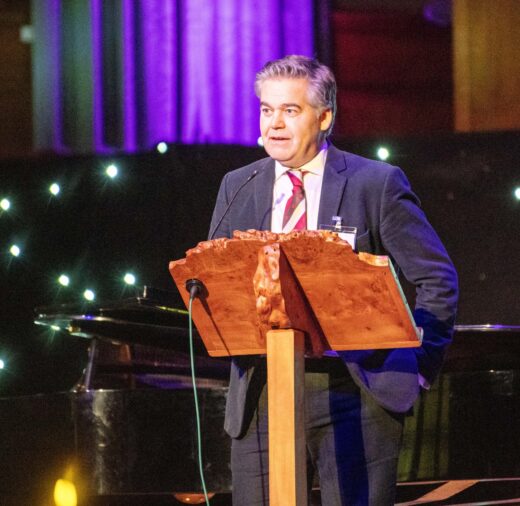
- Duncan Berry, OS Club Chairman
-
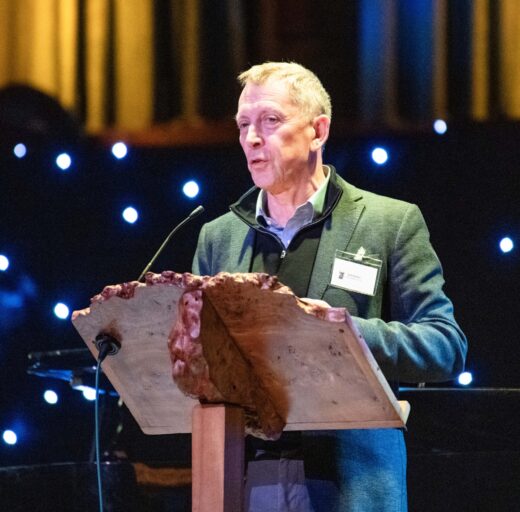
- Jack Buckner, CEO of UK Athletics
-
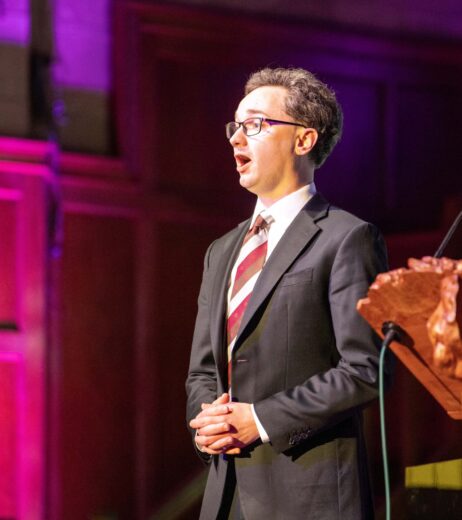
- Tristram Cooke (S 08-09)


-
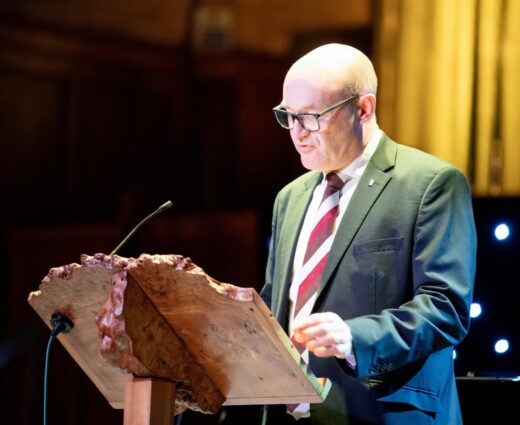
- Dan Harrison, Headmaster