Spanish wine is not just about bold and brassy Riojas… here are a couple of alternatives to get you going…
When it comes to Spanish wine, it’s a bit like coming home. My parents moved to Spain a few years ago, so visiting them was always fuelled with red wine. Looking back, the wine was homely, full-bodied, mainly Rioja, which I enjoyed, but it was before my own lightbulb moment came when thinking about wine.
Tempranillo has always been the star grape of northern Spain, indeed for all of Spain. It’s the main grape found in Rioja, and as a result, it’s often referred to as Spain’s noble grape, which is why it inevitably springs to mind when we think of Spanish wine. Don’t get me wrong, there’s some great Riojas out there…
But there’s much more to Spanish wine… There are some amazing grape varieties that really pack a punch… Mencía is one such example. It has become, at least for me, my ‘go to’ grape when I see it on a wine list. It’s a grape that only grows in the north west of Spain and Portugal, which is why it’s not that well known. It produces wonderfully complex and interesting wines with hints of raspberry, liquorice and pomegranate, not entirely unlike Pinot Noir or Gamay.
One fantastic example we have on the menu at the Black Bull is called ‘Quite,’ produced by Veronica Ortega, one of Spain’s leading young wine producers. She makes some cracking wines in Spain’s Bierzo region, using organic methods and even using amphorae (clay vessels) for part of the ageing process.
‘Quite’ is a real food wine bursting with herbal notes, strong red fruits, dark berry, warm spices and black tea – perfect with roast pork, beef brisket, a whole range of charcuterie, and cheeses like Manchego and Cheddar.
Her higher-end wines blend Mencia with other local grapes, often white grapes, producing very elegant, structured wines. She spent a lot of time learning and working in Burgundy, which influences the wines she produces. Her whites are made mainly from Godello, producing mineral wines with notes of zesty fruit, Chamomile, fennel, and almonds.
Vine Trail stocks most of its range online, and I have seen major wine and whisky websites carrying them as well.
Another grape from Castilla y León, also shared with neighbouring Portugal, is Rufete, which is even rarer than Mencía. Wine makers who use it are creating some truly fantastic wines… There are two types of Rufete: a light red grape and Rufete Blanca, which is rarer still, a white grape that produces textured, aromatic, and mineral-driven wines.
Vina del Cambrico, Sierra de Salamanca, is an organic winery that has specialised in reviving these two local grapes in its region. Not just happy to revive local grapes, they have also worked with the Agricultural Technological Institute of Castilla y León to conduct a scientific study. To date, they have saved 130 micro-plots in the area, which have been maintained or recovered from the undergrowth. The vines are in the Sierra de Francia National Park, so biodiversity and integration with the surrounding wildlife are important considerations. The winery is well developed as a heritage recovery project that encourages visitors, including anyone looking to wander off the beaten track in Spain.
‘Vinas del Cambrico Rufete’ is their red, brim-full of fruit, with hints of balsamic, raspberry, and blackberry, with wild herbs.
The highly acclaimed white, ‘Vinas del Cambrico Rufete Blanca Granito,’ is simply outstanding, with incredibly complex notes of green apple, fennel, and stone fruits, finished with a hint of oak and a sherry-like character throughout. I remember the first time I tried the white. During a tasting among hundreds of wines, it was one of the last, after I had failed to spit increasingly as the day progressed. Yet it sat bolt upright, and both Nina and I were instantly enchanted.
Although rarer, these can be found online fairly easily. They have a variety of other wines, including some made with Tempranillo, if you want ones that you know have been produced with traditional farming practices and biodiversity in mind.
These are just a couple of producers in a sea of quality Spanish wineries, not just in the north. Grapes and regions are resurfacing that should never have fallen off our radar. If there’s one thing to thank the ‘natural’ wine movement for, and you don’t have to appreciate them all, it’s putting these regions and grapes back in the spotlight. Our growing and much-needed interest in the environment should further our support for smaller, independent producers. As much as this column is to recommend wines, I’d really like to think it inspires people to explore that little bit more.
The Black Bull The new 1525 Society President, Major General Jonathan Shaw CBE, is delighted to host two special lunches in 2026—one in Sedbergh and one in London—bringing members together to enjoy great company and celebrate our shared connection to Sedbergh School.
Both events include a drinks reception at 12.30pm followed by a three-course lunch at 1pm.
Dress code: Smart casual
Cost: Free of charge
Booking: Essential (places are limited)
Sedbergh – Saturday 9th May 2026 at The Black Bull. Please here HERE to book your place.
London – Friday 5th June 2026 at Browns Covent Garden. Please click HERE to book your place.
Early booking is recommended to avoid disappointment!
We look forward to welcoming you to one or both of these special occasions, and thank you for your continued support to the legacy programme.
On Thursday 26th March, Sedbergh School hosted a special dinner in London to celebrate the School’s rich rugby heritage.
The event took place in Carisbrooke Hall, a chandelier-lit, galleried space within the Victory Services Club, a prestigious military members’ club near Marble Arch.
Over 150 guests attended, bringing together Old Sedberghians from the 1950s through to the 2020s, alongside current and former staff and friends of the School.
Rugby was the common thread uniting them all. Many in attendance were former SSFC players, their passion for the game as strong as it had been during their days playing on Busk.
The high-ceilinged room reverberated with laughter as guests gathered for pre-dinner drinks, exchanged stories and picked up on conversations where they had left off, sometimes years before. Such was the collective enthusiasm that it proved a challenge to call everyone to their seats, but OS Alex Hambly (H 77–82), expertly fulfilling his role as Master of Ceremonies, rose to the occasion.
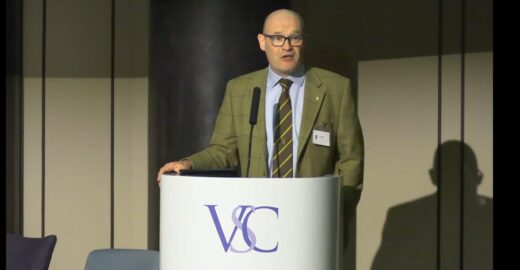
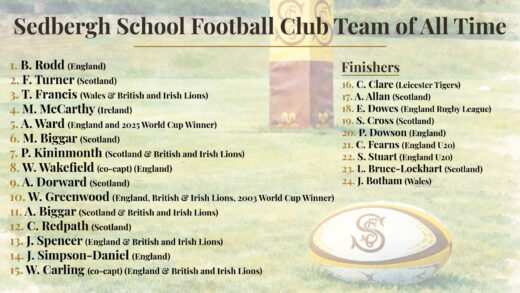
Headmaster Dan Harrison, having earlier in the day started Sedbergh’s Wilson Run which had been rescheduled due to terrible weather, travelled swiftly down from Cumbria to deliver an exciting opening address. As both Headmaster and a former Director of Rugby for eleven years, he was in a unique position to unveil “The SSFC Team of All Time,” a selection of the finest Sedbergh players from across the School’s history.
Selecting such a team was no easy task, given Sedbergh’s long-standing reputation for producing outstanding rugby talent. The line-up prompted cheers, nods of approval and some lively debate among guests. With so many exceptional players to choose from, it was fortunate that a list of “non-travelling reserves” meant even more names could be recognised.
A three-course dinner followed, featuring a salmon starter, melt-in-the-mouth beef, and berry cheesecake – all accompanied by animated conversation.
After dinner, former England captain, British and Irish Lion, and Harlequins legend Will Carling OBE (W 1979–84) took to the stage to share stories and reflections. He spoke about the lasting impact of Sedbergh on both his life and rugby career, and looked back on his time as England’s youngest captain, recalling how he had viewed his role as one of drawing on the strengths of others: “I just remember the first time I stood up in front of [the team], and I thought – there’s all this experience, all this knowledge that’s sat in the room, and if I can just access this… hopefully we can start winning games.”
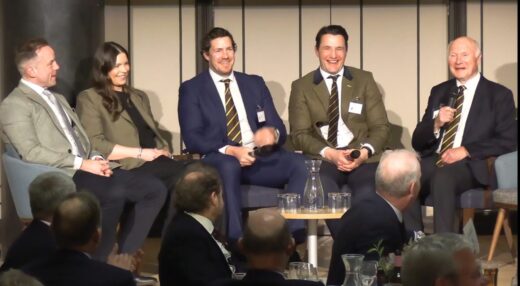
He then led a lively panel discussion featuring five distinguished Old Sedberghian rugby figures:
• Phil Dowson (H 1993–2000), England international and Director of Rugby at Northampton Saints
• Mike McCarthy (SH 1993–2000), Ireland international with Newcastle Falcons, Connacht and Leinster
• Abbie Ward (R 2009–2011), England Rugby World Cup winner and Bristol Bears forward
• John Spencer (E 1961–1966), former England captain, British and Irish Lion and Headingley stalwart
• Ewan Dowes (W 1997–1999), former England Rugby League international with Leeds Rhinos and Hull FC
The panel discussion will be available to view in due course.
Also in attendance were several rugby stars, including Ali Crossdale (P 2014–16), formerly of Perpignan and Saracens; Ben Redshaw (S 2018–23) of Gloucester Rugby; and Annie Roué (R 2022–24) of Sale Sharks.
Ben Collins (P 1996–2002), Acting Director of Development and Alumni Relations, summed up the spirit of the occasion: “It was wonderful to see generations of Sedberghians and friends of the School coming together to celebrate their shared love of both the game and the School. It is a real privilege to spend time in the company of such outstanding rugby players, and such exceptional people.”
That sentiment was echoed by Will Carling, who reflected on the lasting impact of Sedbergh’s rugby tradition: “I was lucky enough to play for many teams, and I’ll be honest, I loved playing for two of them,” he said. “One was England, and one was Sedbergh.”
Read the School’s press release HERE.
The 2026 Six Nations Championship once again showcased rugby at the highest level, with nations battling for northern hemisphere supremacy. Sedbergh School has long been renowned for producing outstanding rugby talent, and this year was no exception, as three OS stepped onto the international stage to represent their countries with distinction.
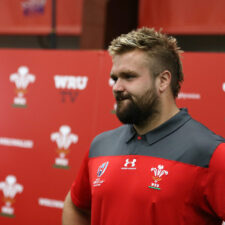
Tom Francis (W 05–08) – Wales
Tom Francis was recalled to the Wales 38-man squad for the 2026 Guinness Men’s Six Nations, returning after his last appearance at the 2023 World Cup. The experienced tighthead prop, who moved to Provence in France, was brought back by coaches to bolster a key position and provide vital experience to the Welsh front row, bringing 76 caps of experience to a squad with a 26.5 year old average age.
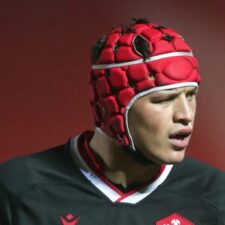
James Botham (E 11–16) – Wales
Wales flanker James Botham was promoted to the starting XV to face Ireland in Dublin on 6th March after a strong return to the international stage. He continued to play a vital role throughout the championship. Following an impressive campaign, he committed his future to Cardiff Rugby by signing a new contract.
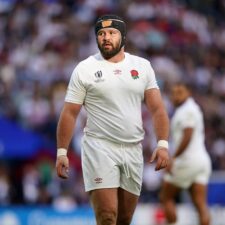
Bevan Rodd (E 11–18) – England
Sale Sharks prop Bevan Rodd was named in Steve Borthwick’s 36-man England squad for the 2026 Six Nations, starting on the bench in the opening match against Wales on 7th February. Rodd featured throughout the campaign, appearing in multiple matches in the tournament.
The presence of these three OS in the 2026 Six Nations is a testament to the School’s enduring rugby tradition and its ability to develop players capable of competing at the very highest level. Their contributions, whether through experience, impact performances, or squad depth, reflect the strength of the Sedbergh pathway and provide inspiration for the next generation of players aspiring to follow in their footsteps.




 A three-course dinner followed, featuring a salmon starter, melt-in-the-mouth beef, and berry cheesecake – all accompanied by animated conversation.
After dinner, former England captain, British and Irish Lion, and Harlequins legend Will Carling OBE (W 1979–84) took to the stage to share stories and reflections. He spoke about the lasting impact of Sedbergh on both his life and rugby career, and looked back on his time as England’s youngest captain, recalling how he had viewed his role as one of drawing on the strengths of others: “I just remember the first time I stood up in front of [the team], and I thought – there’s all this experience, all this knowledge that’s sat in the room, and if I can just access this… hopefully we can start winning games.”
He then led a lively panel discussion featuring five distinguished Old Sedberghian rugby figures:
• Phil Dowson (H 1993–2000), England international and Director of Rugby at Northampton Saints
• Mike McCarthy (SH 1993–2000), Ireland international with Newcastle Falcons, Connacht and Leinster
• Abbie Ward (R 2009–2011), England Rugby World Cup winner and Bristol Bears forward
• John Spencer (E 1961–1966), former England captain, British and Irish Lion and Headingley stalwart
• Ewan Dowes (W 1997–1999), former England Rugby League international with Leeds Rhinos and Hull FC
The panel discussion will be available to view in due course.
Also in attendance were several rugby stars, including Ali Crossdale (P 2014–16), formerly of Perpignan and Saracens; Ben Redshaw (S 2018–23) of Gloucester Rugby; and Annie Roué (R 2022–24) of Sale Sharks.
Ben Collins (P 1996–2002), Acting Director of Development and Alumni Relations, summed up the spirit of the occasion: “It was wonderful to see generations of Sedberghians and friends of the School coming together to celebrate their shared love of both the game and the School. It is a real privilege to spend time in the company of such outstanding rugby players, and such exceptional people.”
That sentiment was echoed by Will Carling, who reflected on the lasting impact of Sedbergh’s rugby tradition: “I was lucky enough to play for many teams, and I’ll be honest, I loved playing for two of them,” he said. “One was England, and one was Sedbergh.”
Read the School’s press release HERE.
A three-course dinner followed, featuring a salmon starter, melt-in-the-mouth beef, and berry cheesecake – all accompanied by animated conversation.
After dinner, former England captain, British and Irish Lion, and Harlequins legend Will Carling OBE (W 1979–84) took to the stage to share stories and reflections. He spoke about the lasting impact of Sedbergh on both his life and rugby career, and looked back on his time as England’s youngest captain, recalling how he had viewed his role as one of drawing on the strengths of others: “I just remember the first time I stood up in front of [the team], and I thought – there’s all this experience, all this knowledge that’s sat in the room, and if I can just access this… hopefully we can start winning games.”
He then led a lively panel discussion featuring five distinguished Old Sedberghian rugby figures:
• Phil Dowson (H 1993–2000), England international and Director of Rugby at Northampton Saints
• Mike McCarthy (SH 1993–2000), Ireland international with Newcastle Falcons, Connacht and Leinster
• Abbie Ward (R 2009–2011), England Rugby World Cup winner and Bristol Bears forward
• John Spencer (E 1961–1966), former England captain, British and Irish Lion and Headingley stalwart
• Ewan Dowes (W 1997–1999), former England Rugby League international with Leeds Rhinos and Hull FC
The panel discussion will be available to view in due course.
Also in attendance were several rugby stars, including Ali Crossdale (P 2014–16), formerly of Perpignan and Saracens; Ben Redshaw (S 2018–23) of Gloucester Rugby; and Annie Roué (R 2022–24) of Sale Sharks.
Ben Collins (P 1996–2002), Acting Director of Development and Alumni Relations, summed up the spirit of the occasion: “It was wonderful to see generations of Sedberghians and friends of the School coming together to celebrate their shared love of both the game and the School. It is a real privilege to spend time in the company of such outstanding rugby players, and such exceptional people.”
That sentiment was echoed by Will Carling, who reflected on the lasting impact of Sedbergh’s rugby tradition: “I was lucky enough to play for many teams, and I’ll be honest, I loved playing for two of them,” he said. “One was England, and one was Sedbergh.”
Read the School’s press release HERE.