OS Duncan Berry (SH 85-91) has been Chairman of The Old Sedberghian Club since January 2023. With a long-standing connection to the School, including his father authoring the history of The Wilson Run and at least four generations of his family linked to Sedbergh, we caught up with him to find out what inspired him to take on the role.What do you value most about the Old Sedberghian Club and its community?
There’s nothing quite like attending an OS event and reconnecting with friends and familiar faces. The stories are retold, often becoming more embellished as the years go by, which is all part of the fun.
One of the things I particularly enjoy is catching up with those who were several years above me at school, older pupils of whom you might have been slightly in awe. Years later, you find yourselves sharing stories over a drink or two as equals. That sense of shared experience fosters a strong connection.
Looking back, what were the highlights of Sedbergh’s 500th anniversary year for you?
The OS Club dinner at Lord’s Cricket Ground was truly fantastic. Having previously been there as a spectator, it felt incredibly special to enjoy a wonderful meal in the Long Room: a beautiful, historic space with amazing views over the pitch, and an exclusive area you wouldn’t ordinarily have the opportunity to spend time in.
The Christmas Carol Service at York Minster was also spectacular. Listening to the choir and soloists in such magnificent surroundings genuinely gave me goosebumps. Having so many people connected to Sedbergh gathered together beneath the cathedral vaults, surrounded by beautiful music performed by our current pupils, was magical.
What events or initiatives are you most looking forward to in 2026?
The Rugby Dinner at The Victory Services Club in London on 26th March promises to be a great evening, with some of the sport’s true giants sharing their unique insight and conversation (Will Carling, Abbie Ward, Phil Dowson and John Spencer among other big names!). The event is selling fast so book now if you haven’t already. We hope this event will also inspire a strong turnout to support the School at the Rosslyn Park National Schools Sevens finals the following day.The Wilson Run is always another standout annual event. It’s always fantastic to see so many OS and parents returning to tackle the course in whatever way they can. The sheer number of people taking part now is incredible – the sight of the course alive with runners on a crisp morning is very special.
What do you find most fulfilling about your role?
What I find most rewarding is seeing the growing number of Old Sedberghians, across all generations, engaging with the Club and attending the events so thoughtfully organised throughout the year.
It’s particularly gratifying to hear from those who haven’t returned to Sedbergh for many years — sometimes not since they left — and who say after an event that they won’t leave it so long next time. That renewed connection to the School and to each other is exactly what the Club is about.Looking for fresh ideas to elevate your cooking and explore great flavours? Check out the Nigel Barden blog on nigelbarden.com!
Nigel (P 72-77) has combined a long career at BBC Radio with numerous TV appearances. He broadcast with Simon Mayo and Chris Evans on their BBC Radio 2 Drivetime show for 12 years and now presents the DrivetimeShow on Greatest Hits Radio. He is the longest standing contributor to BBC Radio London (since 1990), with the last 25 years on the Robert Elms Show. Nigel is also a BBC rugby commentator, hosts live consumer events and food festivals, is a restaurant critic and a food and drink industry compère.
From mouth-watering recipes from his Greatest Hits Radio cookery slot to insider tips on sourcing the best ingredients, Nigel shares a feast of content every week on his blog. You’ll find dishes he’s “reviewed, cooked, eaten and enjoyed,” all with his signature passion for quality produce and flavour.
Whether you’re a seasoned home cook or just looking for inspiration, there’s something tasty waiting for you.The Symonds run took place on the 17th January and once again there was a large field of runners from across the School – staff, guests, parents and OS. In all there were 419 finishers completing the Morgan run course. This year a Stonyhurst alumni team also joined the event for the first time, and hopefully they will be able return in future years. They certainly seemed to enjoy the day. Thanks must also go to Richard Wells and his team for organising the event. It is certainly much appreciated by the OS team and all who took part.
The course on the day was very wet underfoot but the weather remained dry.
First place this year went to Ben Harrison of the staff team finishing in a time of 27:40. He was followed home by Hugo Berry in 28:00 for the School VIII. Sam Gunning was first counter for the OS team finishing 6th in 30:00 with Simon Rowland first counter for the Stonyhurst team in 8th place(30:48). In the ladies field Lydia Barker-Chapman was first placed and guest runner in 31:22 (10th), whilst Lucia Connell finished first counter in the girls VIII in 31:46 (12th).
It was also good to see members of the Symonds family take part in the race once again in memory of Hugh. Joe Symonds was unable to join the OS team due to illness, but Pauline Symonds, Amy Manning (nee Symonds), Steve Manning and Oliver Manning all took part, spanning three generations.
The team results showed a strong performance from the School boys VIII who closed their team at 24th place. They took 1st team with 71 points ahead of the staff on 138. The guest’s team were 3rd with the Stonyhurst alumni team 4th. The School girls VIII put in a strong performance for 5th and the OS team came home 6th, edging one point ahead of Winder House.
The overall results can be viewed HERE.
Sam Gunning
Lydia Barker-Chapman
Many thanks to all who turned out to support the team at the Symonds Run this year. There are more fixtures later in the year for anyone who may wish to join the team:
Alumni race: Wimbledon Common (Sept)
Possible race at Stonyhurst (Nov)
Review by Geoff Watson (E 89-94)Stuart Oliver, Sedbergh School Assistant Head – Co-Curricular, took 11 Old Sedberghians out to Kenya, where they lived and worked at Restart Africa, an orphanage located in Gilgil, around three hours north of Nairobi. What followed was an experience that was both humbling and rewarding for everyone involved.
During their time at Restart Africa, the OS quickly forged bonds with the children in the community. The connections made, the shared laughter and the everyday moments captured in the accompanying video speak volumes about the impact of the trip — and the memories formed will undoubtedly last a lifetime.
The group travelled with more than 270kg of gifts, toys, and essential supplies, all of which were donated directly to the children at Restart Africa. In addition, the OS organised and led a series of trips for the children, offering them new experiences, excitement, and joy outside of their daily routines.
Beyond the orphanage, the group was also able to support the wider local community. Food packages were provided to 50 local families, each containing enough supplies to feed a large family for several days — a simple but vital contribution that made an immediate difference.
The journey was about far more than what was given materially. It was about shared experiences, mutual learning and gaining perspective in a fascinating country. For those involved, it was an opportunity to serve, to reflect and to reconnect with Sedbergh’s values in a global context.
Watch the video below to see some amazing moments of this trip.
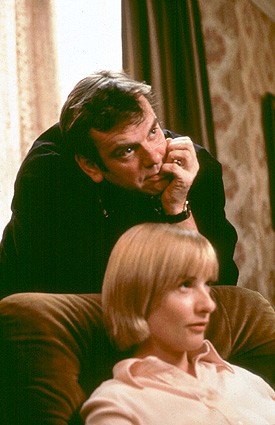
Mark Herman (H 68–73) is an award-winning British screenwriter and director, best known for Brassed Off (1996), Little Voice (1998) and The Boy in the Striped Pyjamas (2008). Herman has built a career telling stories that explore working-class life, survival and the resilience of the underdog.
Can you recall why Sedbergh was chosen for your schooling?
That’s something my brothers and I have often wondered about over the years. We were football-mad, so a school known for rugby might not have seemed the obvious choice. I know my parents were very taken with the spectacular setting and the welcome they received on their visit. In particular, they were impressed by the then Housemaster of Hart House, Mr Madge, who unfortunately retired just before I arrived. But those early impressions clearly mattered.
How much provision was there for creative arts during your time at Sedbergh?
Back then, there was no structured art education, just the chance to dabble in ‘hobbies’. But I do remember the art building and occasional encouragement from staff, including the moustachioed art master, Mr Inglis. A much clearer memory I do have is seeing one guy, a contemporary from Winder House, fill up an entire wall with an enormous collage of cut-out newspaper shreds depicting the famine in Biafra. It was spectacular and obviously very memorable because it has stuck with me all this time. He was called Chris Bjelland and amongst his achievements he became the chairman of The National Museum of Art in Norway.
Tell us about your path after leaving Sedbergh School.
I went on to take a BA in Graphic Design at Leeds Polytechnic in which I applied to study various options including illustration, graphic design and printmaking, but I had hardly shone brightly in my first year and, quite reasonably, none of those departments wanted to take me on! It was only a man in charge of the film department, a brilliant tutor called Adrian York, who was willing to ‘take the risk’. There have been a couple of times in my education and career when a specific teacher, tutor or mentor made all the difference – offering far more belief in me than I had in myself – and were the reason for me battling on rather than giving up. I had assumed I’d end up somewhere in the artistic field by the time I graduated; I just hadn’t expected it to be in film.
You went on to study at the National Film and Television School alongside Nick Park, creator of Wallace and Gromit. To what extent did your experience working alongside other filmmakers inspire your own student projects?
I’d initially applied to study animation, but working alongside talents such as Nick Park quickly made me give that up. I was so far behind in that respect that I couldn’t imagine how far behind I’d be in the real world. I spent only a few months in animation – including a couple of weeks adjusting the sunglasses of the mice in A Grand Day Out – before switching to live action.
I first shot a documentary, then moved into screenwriting, which I enjoyed thoroughly. The film school at the time was seriously unstructured: you essentially had free rein to get on with things yourself. I learned mostly by instinct, paying close attention to which films I liked and, more importantly, working out exactly why I liked them – what the tricks were that triggered me. Looking back, it’s fair to say I was largely self-taught, and that learning continues to this day.
After graduating from the NFTS, I had a couple of early projects considered by the BBC, but nothing progressed very far. I did write one sitcom episode for ITV, but “writing to order” wasn’t for me, nor the “writing by committee” it tended to become.
Obviously, my screenwriting career has always involved script editors and all and sundry putting forward views, but I have always managed to retain some control as sole writer, and that freedom usually leads (I think!) to a better finished product.
Your film Brassed Off was both critically acclaimed and joyful to watch. What inspired you to write it?
My first feature film – a Dudley Moore comedy – had bombed critically, and for a while agents wouldn’t touch me with a bargepole. It was hard trying to get the next film off the ground.
The best advice I’ve ever been given, and advice I now pass on to young writers, is not to worry about an audience, but simply to “write something you care about”. It took me a long time to find such a thing, but it happened one day in the early 90s when a roadworks diversion took me through the South Yorkshire coalfields, through pit villages I’d known a decade earlier when I worked as a travelling rep. The shops I used to sell bacon to were now boarded up, and the communities looked like ghost towns. Like everyone, I’d followed the news of the miners’ strikes, but I hadn’t really understood the effects of the government’s pit-closure programme. These communities had been destroyed. That sparked something for me.
A week later, on another drive, I heard a radio story about a brass band in the North East having to close because of a lack of subscriptions, and I married those two threads together to form the story. That’s not to say my advice to budding writers is to sit in a car and wait – I’m afraid it isn’t quite that simple!
Perhaps your most famous film is The Boy in the Striped Pyjamas. What motivated you to explore such challenging subject matter?
It’s interesting how dusty memories of Sedbergh kept resurfacing during the planning of that film. People were, quite understandably, concerned not just about the PG rating, but about whether children would recognise the story as a fable rather than an accurate depiction of the Holocaust.
My own introduction to the Holocaust, common back in the 60s, was brief and cold: horrible facts, huge figures, all very text-driven. It wasn’t until an English teacher at Sedbergh, Mr Barter, dropped a book on my desk called Things That Matter, which included a photograph of the aftermath of a gas chamber, that it began to sink in. Rather than the facts and figures, it was the power of that image that truly shook me.
As I researched for the film, many present-day educators seemed to suggest that the way the Holocaust is taught in schools hasn’t changed all that much. My intention, therefore, was to reach young viewers emotionally – to pull them in by the heartstrings, leaving their heads wanting to find out more.
I suppose I always knew the film might upset or annoy some people with its unrealistic narrative, but I also knew that if it was embraced as the fable it was intended to be, it could encourage children to learn more. The goal was to make a family film in the truest sense – one the whole family could watch and discuss afterwards.
It reminded me that, in any list of the most influential teachers in my life, Mr Barter had to be included.
Did being a writer change how you approached directing?
I’ve never done anything other than both write and direct. It helps in that as director, you know (or at least you should know!) exactly what the writer intended with every line. I don’t think I’m a control freak, but as writer-director you do have the ability to tweak both roles: even as late as on set you can re-write a scene on a whim.
As well as writing for the screen you have also written lyrics. How does the process of song writing differ from screen writing?
Lyrics have always been a hobby, a diversion. Screenplays can take years and countless drafts, whereas songs – if you’re lucky – can come together in minutes. Songs feel more like quick fun puzzles; I don’t eat, sleep and breathe a song like I do a screenplay. It’s much more of a fun, relaxed process as well.
You often feature ‘underdog’ or unheard characters in your writing. Has it been a conscious priority to provide a voice to marginalised groups?
That hasn’t been a conscious intention, though the battle of the underdog is always an attractive narrative for me to explore because there’s always uplifting drama in there. Someone recently pointed out that most of my films explore ‘father and son’ themes – Brassed Off, Little Voice, Purely Belter, The Boy in the Striped Pyjamas – and I’d never realized I was doing it. It’s certainly not conscious. It’s alarming how often people explain to you what you’re doing. So thank you!
It has been ten years since your last major screenwriting project, do you still write?
Over the last decade, alongside a growing disillusionment with the industry I have also had quite a battle with health, the big C included, which has meant I’m unlikely to take on new directing projects. However, I have carried on writing and am currently working on a screenplay about the comedian Spike Milligan and his battles with mental health. At over 70 I’m not as hungry as I once was, and I’m pickier, so the project has got to be the right one.
What advice would you give to aspiring screenwriters?
I always go back to a quote I saw from the comedy writers Galton & Simpson: “Don’t get it right, get it written”. It’s much better to just get something down, anything, any old rubbish, than nothing. Without being pretentious, screenwriting is a bit like pottery – you hopefully end up with something beautiful, but you’ve got to start by chucking a whole clunky ugly chunk of clay onto the table. Don’t worry about it, don’t angst about it, just write. I’ve spent an awful lot of days deleting more than I wrote. And also, I’d go back to what I mentioned earlier: it helps to not to worry about bums on seats, but instead just write about something you really care about.
We are saddened to announce that Richard Kooper passed away on 20th January 2026.
Richard was described by colleagues as a self-effacing, conscientious, compassionate teacher who quietly shouldered any responsibility that was requested. For years he managed the link between Sedbergh and ‘The Bradford Boys Club’, he ran the Duke of Edinburgh Award Scheme and coordinated start and end of term travel for international pupils with great care and efficiency.
Having come to Sedbergh in 1975 from a stint at the City of London School, he taught French, German and his particular specialism, Russian, to countless students.
On mountain and fell both in the UK and abroad, Richard led and organised expeditions. He skied, climbed and enthused rafts of children with his own deep love of the wild open spaces that he and Barbara had come to Sedbergh to revel in, and in which to bring up their children Peter and Elizabeth. Alongside him, Barbara was a constant smiling presence in so many areas of school life from Games Shop to OS Club, for whom nothing is ever too much trouble. Richard was an admirable cyclist, and at one time arguably the fittest man on the campus, and in his typical blue shorts he was met running on many a high fell.
Adapted from the Valete article written by Mr S M Manger for the 2002 Sedberghian magazine.
Dear Friends,
As I come to the end of my term of office, as a Governor of Sedbergh School, and as Chair of the Board of the School, I wanted to write to our pupils and their parents, our staff and Governors, and all the friends of Sedbergh School to thank you for everything you do to make Sedbergh such a great school. You all are what makes Sedbergh so special.
My career at PwC was spent in London, Hong Kong and New York and, for much of that time, Sedbergh was far from my thoughts. I was slightly surprised in the summer of 2012 to be invited to a dinner for Winder House alumni from the 1960s. We had a great evening, and by the end of it I had agreed to become a Governor of the School.
My appointment was subject to a meeting with Hugh Blair, then Chairman of the Board, and Andrew Fleck, the Headmaster at that time. I was to be billeted in Lupton House, and was accosted by a girl standing near the front gate. I said that I was there to meet the Housemistress, and asked if she could show me to her office. “Certainly Sir”, she replied, smiling broadly, “Let me carry your bag!”. If I had any doubts about becoming a Governor, that kind and confident pupil saw them off.
Pupil numbers remained steady in my first few years as a Governor, but the School needed to grow revenues in other ways too, not least to help fund the maintenance and renewal of an aging and historic school estate. With that in mind, in 2015 we began to look at developing Sedbergh Schools internationally, and I took the lead on this on behalf of the Board, working with Peter Marshall, then Chief Operating Officer of the School.
Our first forays in the Middle East were ultimately unsuccessful, but provided important learnings that enabled us to move quickly to sign agreements for our first international school in Fuzhou in south eastern China, with the Djuhar family. The first phase of this wonderful campus opened in September 2018. The Djuhars were determined to build a world class school in their home city, and to embed the values and history of Sedbergh there.
In 2019, Hugh Blair told the Board that he intended to retire the following year, and I was humbled that the Board felt that I was just the man for the job. Hugh Blair was an early victim of COVID-19, caught at a rugby international in Milan, and was off work for some time. So my first task as acting chair was to authorise the closure of the School campuses in March 2020 – not quite the launch pad for my time as Chair that I had hoped for!
We all have very personal memories of COVID-19, and many families lost loved ones. But I am hugely proud of how the School, all our pupils, parents, Governors, staff and alumni rose to the challenge of sustaining a Sedbergh education through such difficult times. Coming out of COVID-19, pupil numbers continued to grow, helped by the very positive parental perceptions of the School’s response to the pandemic. It felt wonderful to get back to business as usual, and to be able to plan for the future.
My first few years as Chair saw continued investment in the estate, including the creation of a new Sixth Form Study Centre in Queen’s Hall, the New Field Hockey Centre next to the Hirst Centre, and the play barn and the refurbished sports hall at Sedbergh Prep; and we also opened a second international school in Vietnam. Exam results have continued to be strong, with a magnificent ‘value added’ score in A levels last year. We also had great inspection reports at both Schools in 2025.
In July 2024 the Labour party won a landslide victory in the General Election and moved quickly to implement a manifesto pledge to levy VAT on independent school fees. The sector had been bracing for this change for some time, but the impact – particularly on boarding schools and on smaller prep schools – has been harder and faster than anyone anticipated. So my final two years as Chair have been preoccupied with making the school VAT-ready: sustaining pupil recruitment through our brilliant marketing and admissions work, working with our feeder schools to help them weather the storm, driving efficiency savings across our organisation – so that we can share the burden of VAT with parents – and supporting those parents who are still struggling to keep their children at Sedbergh.
This last year marked the quincentenary of the founding of the School by Roger Lupton in 1525. Sedbergh School is surely a very different place to that small school he founded 500 years ago. But I hope that he would recognise the ethos of the School today, and celebrate all that Sedbergh, and Sedberghians, have achieved in those 500 years.
My term of office as Chair and as a Governor is now over, with Ian Durrans taking over the role of Chair at Christmas. I have known Ian since the early 1980s, and I have every confidence that I am leaving the School in safe hands. Leaving the Board, that is, but not yet the School. Ian has asked me to continue to support the Foundation and also the international activities of the School. So, as with the regular rhythm of school life at Sedbergh over the centuries, one term ends, and another starts….
The last five years have been some of the most challenging for the independent schools sector, with the COVID-19 pandemic at the start of the decade and, more recently, the imposition of VAT on private schools. Pupil numbers have fallen dramatically across the sector, many schools have closed and even more are in financial difficulty, with many once proud independent prep schools seeking shelter through mergers and acquisitions. Against this backdrop, I am very proud to be leaving Sedbergh and Sedbergh Prep in such fine shape.
Floreat Sedberghia.
Richard Gledhill (W 1967-71)Sedbergh School marked the conclusion of its 500th anniversary celebrations with a magnificent carol service at York Minster, honouring both the School’s rich heritage and the strength of its present-day community.The celebrations began with a sell-out Sedbergh Association dinner at the historic Merchant Adventurers’ Hall, one of York’s most iconic venues, dating back to the 14th century. Twinkling lights, festive decorations and ancient timber beams made for an atmospheric setting where 190 guests, including Old Sedberghians, friends of the School and members of staff, gathered to share a two-course dinner. Guests were warmly welcomed by OS Club Chairman Duncan Berry, before Headmaster Dan Harrison reflected on the particular significance of York in Sedbergh’s anniversary year – touching on the pilgrimage made 500 years ago by the School’s founder, Roger Lupton, who walked from Sedbergh to York to be ordained as an acolyte.Following dinner, guests took a short walk through York’s historic streets to the awe-inspiring York Minster, where the evening culminated in a spectacular carol service. The Sedbergh School Chapel Choir, joined by the Casterton Sedbergh Prep School Choir and other affiliated choirs, filled the vast space of the Minster with exquisite music. Their performance was shared with a congregation of 1,500 members of the wider Sedbergh community, who joined together in traditional congregational carols.Reflecting on the evening, Acting Director of Development, Ben Collins said: “What a way to round off the 500th anniversary! Without a doubt, one of my favourite Sedbergh Association events. Two magical venues and a wonderful mix of people across the community. The perfect blend of Christmas cheer and 500th anniversary celebration. It made me incredibly proud to be an Old Sedberghian.”We were contacted by OS Michael Pollitt (L 69-73) who informed us that his aunt, Margaretta D’Arcy, had passed away in Galway on 23rd November 2025, aged 91. Though she never attended Sedbergh, her life was deeply linked to our community through her marriage to John Arden (Hart 1944-49) – one of the most significant British playwrights of the late 1950s and early 1960s.
Born in Barnsley in 1930, John Arden was educated at Sedbergh School, where his independent spirit was already evident. He famously wore an overcoat every day – even in the height of summer – defying the headmaster’s protests with the challenge: “Show me the School Rule that says I can’t wear an overcoat, and I’ll stop.” That rebellious streak would later define his career.
After Sedbergh, Arden studied at King’s College, Cambridge, and the Edinburgh College of Art, before emerging as a leading voice in British theatre. His breakthrough came with Serjeant Musgrave’s Dance (1959), a powerful critique of militarism that remains a classic of post-war drama. Influenced by Brecht and Epic Theatre, Arden’s plays – such as Live Like Pigs, The Workhouse Donkey, and Armstrong’s Last Goodnight – challenged audiences to confront uncomfortable truths about power and society.
Arden’s literary achievements extended beyond the stage. His novel Silence Among the Weapons was shortlisted for the Booker Prize in 1982, and he was a member of the Royal Society of Literature. Yet his life was never confined to art alone – he was deeply committed to activism, joining the Committee of 100 against nuclear weapons and chairing the pacifist weekly Peace News.
Margaretta D’Arcy shared Arden’s passion for both theatre and social justice. Married in 1957, they became creative partners and co-authors of plays that were often fiercely critical of British policy in Ireland. Their collaboration extended beyond writing: in 1972, they were jailed in India alongside their four sons – a story that dominated headlines as the British Government worked to secure their release.
Margaretta’s activism was relentless. From Greenham Common to Shannon Airport, she campaigned for peace, environmental causes, and civil liberties. Her protests often led to imprisonment, but never to silence. She wrote several books and continued her work for justice until her final days – receiving a visit from President Catherine Connolly shortly before her death.
Margaretta D’Arcy’s funeral took place at Mount Jerome, Dublin, on Friday, November 28, with a memorial service planned for January 6, 2026, in Galway. She leaves behind four sons – Finn, Adam, Jacob (deceased), and Neuss – and grandchildren.
Together, Margaretta and John embodied a rare union of art and activism. Their lives remind us that creativity can be a weapon for justice, and that conviction often comes at a cost. For Sedberghians, John Arden’s story is a proud chapter in our history – one that continues to inspire those who value independence of thought and courage in action.
You can read an obituary in The Guardian HERE.
Remembrance Sunday has long held a special significance at Sedbergh – pupils, parents, alumni and staff have always chosen to mark the occasion at the Sedbergh School Memorial Cloisters. This year was no different as over 1000 people stood in silence, honouring those Sedberghians who had given their lives in conflict.
The Chaplain, Paul Sweeting opened the service:
‘We are gathered together this day in fellowship with many others throughout the world to remember before the throne of God all those who have laid down their lives in the cause of freedom, justice and peace; and to pray for all those who suffered and still suffer by reason of war.’
The evocative service included readings from the Headmaster and Head of School, moments of reflection and silence, communal hymns, and performances by the School choir and the School pipers. Wreaths were laid on behalf of the Old Sedbergian Club, the Royal Navy, the 3rd Regiment Royal Horse Artillery and the Royal Air Force. After the service, following tradition, the School and guests were invited to file past the Victoria Cross memorial and lay their poppy on the monument.
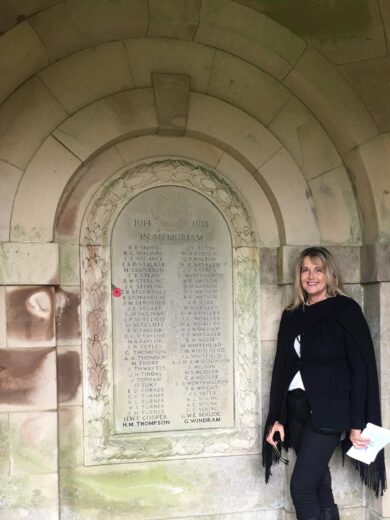
This year had added significance. Three new names of first world war casualties were added to the Memorial Cloisters during the autumn term. News of the war time deaths of these men has only reached Sedbergh recently and so it was an honour to recognise them amongst our casualty lists for the first time.
These men were:
Captain James Fisher, Lupton House (1910 – 1911), King’s Own Royal Lancaster RegimentExaminer Humphrey. M. Thompson, Sedgwick House (1906 – 1909), Aeroplane Investigation DepartmentRifleman George Windram, Sedgwick House (1895 – 1898). Battalion 3rd New Zealand Rifle Brigade
The family of George Windram attended the service and were touched to meet the Rev Paul Sweeting, who earlier this year had visited George’s grave on behalf of the School. Families of Old Sedberghians are warmly welcome to visit the School during our special events, and throughout the year.
To arrange a visit, please contact the Development Office at osclub@sedberghschool.org.
Karin Windram by her ancestor’s name on the Cloisters.




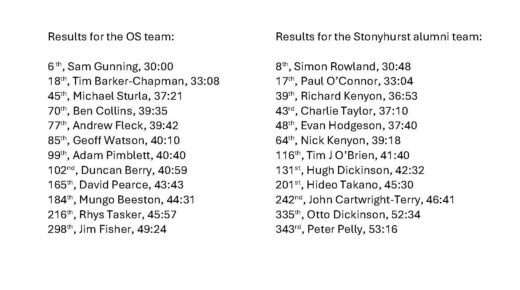 The overall results can be viewed HERE.