




Author: dean
“In June, I am embarking on a road trip with my friend Rafa to the Arctic Circle to compete in the Midnight Sun Marathon: 26 miles of racing the sun before it reaches the horizon.
We have chosen to fundraise for Alzheimer’s Research UK, a fantastic charity fighting against what the ONS has recently concluded as the leading cause of death in the UK.
All donations will support their efforts to understand causes, diagnose earlier and more accurately, spread awareness of risk factors, and discover more effective treatments.
As we come to the end of our 12th week of training, there remains a long road ahead (literally). This is our first marathon and any donations towards Alzheimer’s Research UK would be greatly appreciated. Stay tuned as we post updates about our journey and fundraising leading up to the race!”
You can donate via Fraser’s Justgiving page here.
The School is trying to identify the traditional house ‘dub’ spots used for river bathing. If you can recall which part of the Rawthey, Dee or Lune your house swam in we’d be delighted to hear from you!
During the First World War a drought and national water shortage led to water from the taps in Sedbergh slowing to an ineffective trickle. Each house was assigned a river ‘dub’ in which to bathe. Morning prep at 7.15am was cancelled for the summer term so that boys had time to reach their dub and bathe before morning lessons. Governors’ minutes from the time record that each house had been assigned a dub but sadly do not record the locations. Through the twentieth century houses continued to use a ‘house dub’ however these may have been further afield than the spots originally allocated for early morning bathing.
To help the cognitive juices to flow and trigger memories of swims on balmy summer evenings we’ve included a list of swimming locations mentioned in the memoirs of Old Sedberghians. If you can identify any of the more unusual spots listed, can name which house swum in which spots, or add more swim locations to the list please get in touch with Archivist Katy de la Rivière on kdlr@sedberghschool.org. Dubs with an asterisk have a known location but information about whether they were assigned to a particular house would be welcome.
- Akay dub*
- Lords dub*
- Lune Viaduct dub*
- Lune dub below Waters Meet
- Brewers Dub
- Four Lane Ends dub
- Lincoln’s Inn Bridge dub*
- Straight Bridge*
- Sandy Dub
- Jackdaw Bridge*
- Thrushgill*
- Dorkgill dub
- Rawthey above New Bridge*

Harry Brook hit his maiden Indian Premier League century with 100 not out off 55 balls in Sunrisers Hyderabad’s 23-run win over Kolkata Knight Riders.
The England batter, 24, smacked 12 fours and three sixes in a sublime knock to help Sunrisers post 228-4.
Kolkata could only reach 205-7 in reply despite Nitish Rana’s 75 from 41 balls, and Rinku Singh’s unbeaten 58 off 31.
Brook is the first batter to hit a ton in this year’s IPL and the fifth England batter in history to do so.
Read more here.
Unfortunately over the last year, some dear friends and relations of friends have been diagnosed with Cancer at various stages. Research into this life threatening disease is coming on in leaps and bounds but every bit of fundraising that anyone can do will help to speed this up. I have decided to face my fears so I have persuaded Mum and Dad to buy me a skydive for Christmas. This will be taking place during the Easter Holidays over Morecambe Bay out of Flookburgh Airport. I’d be extremely grateful for your support, be that a couple of pennies or a few pounds towards this great cause. Please see my Justgiving page HERE.
Polina (L 19-22)
In November 2021, Mark Adams (W 1974-1979) was descending the escalator at Bank Station, London, when he tripped and fell. Unconscious, and with a severe head injury, he was fortunate to be attended by two off-duty paramedics who together with the London Air Ambulance Service, undoubtedly saved his life.
That same weekend, his lifelong friend, Tim Proudman, (W 1979) was diagnosed with a brain tumour.
Mark Adams spent the next four days in a coma and was in hospital for several weeks. Assisted by his partner, Becky, his mother, Jan, and his brother, Guy, he slowly learnt to overcome the impairments caused by his brain injury. This started with learning to feed himself, and then to walk, and finally to run.
Tim Proudman, a Plastic and Reconstructive Surgeon from Australia, underwent brain surgery, followed by radiotherapy and an extended course of Chemotherapy. This continues to this day.
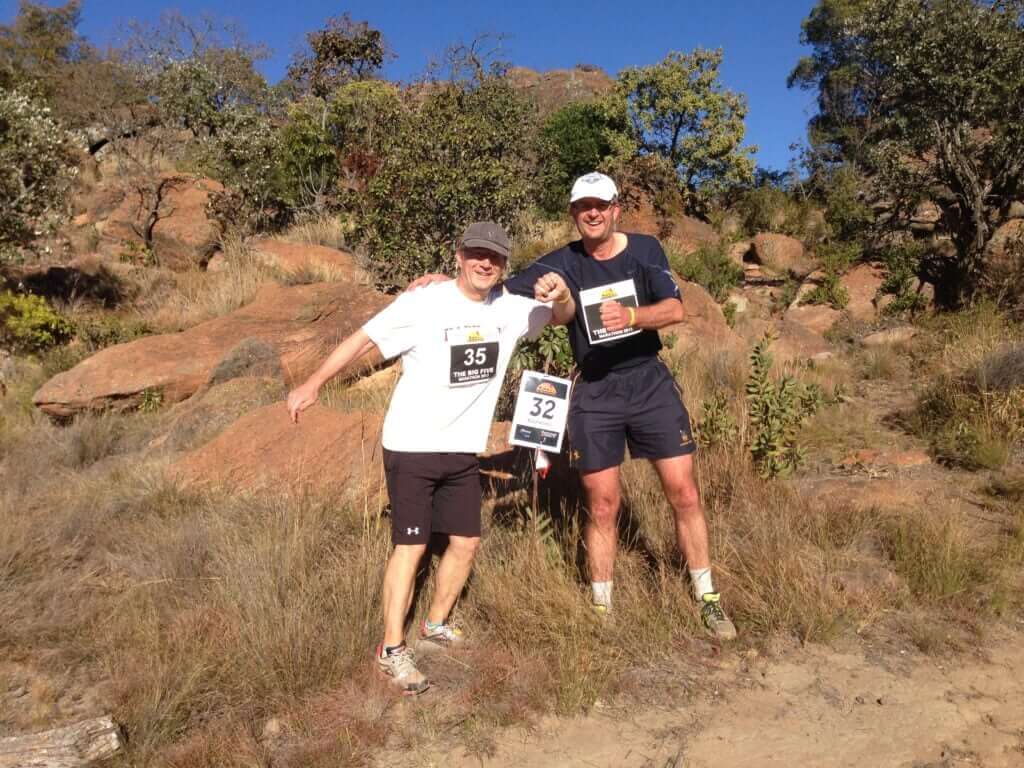
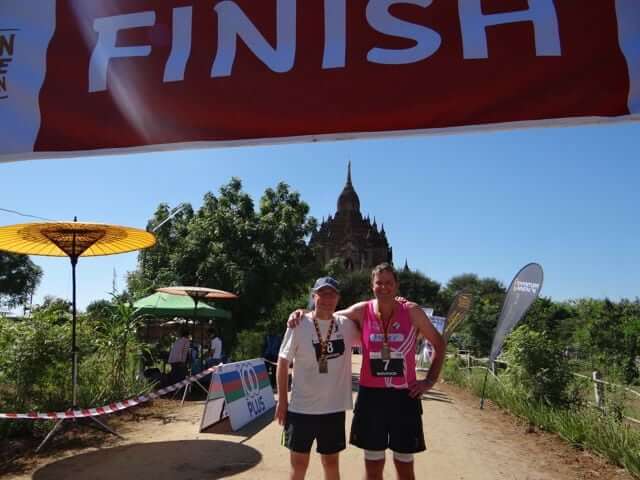
The road to recovery has been long and arduous for both of them. But if ever you want to find an example of the enduring Sedbergh Spirit, then this is where you will find it. These two remarkable men didn’t give up, but having run marathons together on six continents, they decided to enter the Antarctica Marathon on King George Island, which takes place on 12th March.
Both have been training hard. Neither are sure whether they will make it all the way around, but they see this as a celebration, of life, of the freedom of running, and most of all, of friendship.
It is not just that these are two remarkable men, but they are also generous of spirit. I remember as a boy at Sedbergh, both, on separate occasions and as senior members of the school, went out of their way to congratulate me on my reading in Chapel when I was still quite new to the School. I have always remembered their kind words. It was therefore a great privilege for me to speak to them recently, and we will be showing extracts from that interview prior to the Wilson run on 21st March.
In gratitude to those who helped him when he was injured, Mark is raising money for the London Air Ambulance Service. If you would like to support this charity, you will find the link to the Just Giving page here: https://www.justgiving.com/fundraising/markadamsantarctica
Tim Proudman, has done much voluntary work with Interplast (ANZ), and is the coordinator for reconstructive surgery in Bhutan. While he is no longer able to work, he continues to raise funds for this vital organisation. If you would like to know more about it, or to support it, please see the YouTube link here: https://youtu.be/YuhcsXTZ5TE. Tim has also said if anyone else is suffering a similar experience and wants someone to talk to, then please feel free to contact him.
We wish them every success on 12th March and we will be thinking of them as they run their last marathon, on their last continent.
Jan van der Velde
We are up and running! An inaugural video call brought us together for the first time online on 14th February and we had a follow up lunch in London on 2nd March for those who were available.
The group, started in December, already numbers more than 50 entrepreneurs, investors and others who want to support OS founders and on the way generate donations to the Sedbergh Foundation. We have had two pitches already from Andrew Philipson (E 99-05) with Jobba a recruiter platform, and Chantal Kinsella (R 05-08) with Kinsella Homes, a new low scale model for dementia care homes, based in York. Both founders received feedback, recommendations and introductions – thanks to all who contributed!
We wish member James Jackson (H 97-02) much luck in completing his Series B financing round for Bumper (bumper.co.uk)
We are looking for OS and Parents who want to help, and OS founders who want guidance and potentially investment! Join us on the Linkedin group OS Startups Forum, or email Andrew Stott at support@osstartups.com
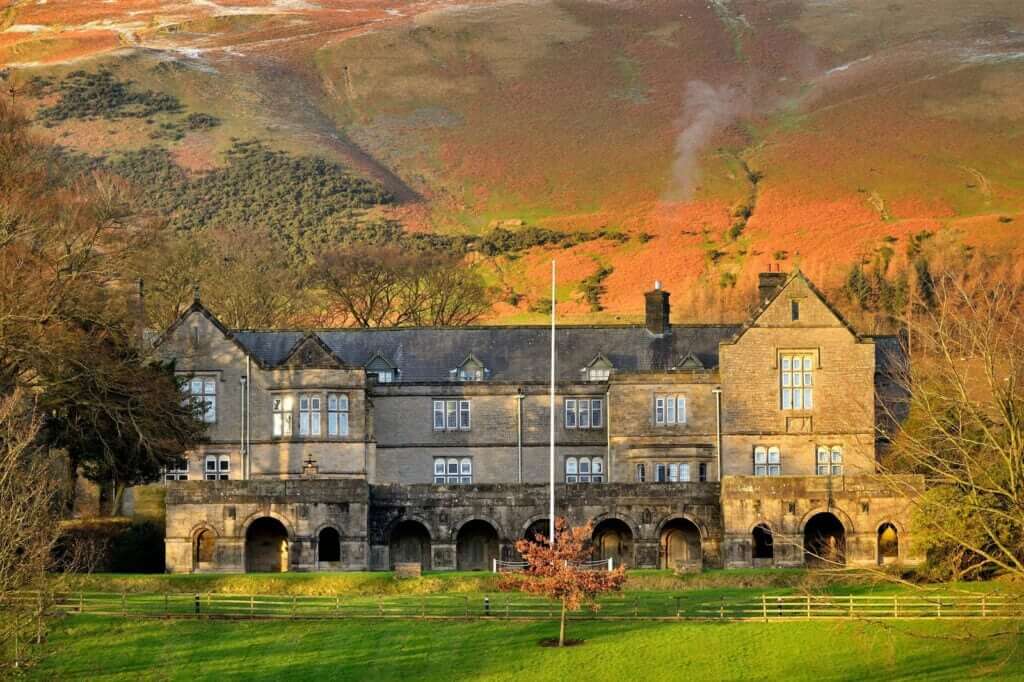
Inaugurated in 1897, the Old Sedberghian Club is a long-established institution which looks to celebrate friendships and heritage, and also to help the next generation with their career aspirations as they make their own way in the world.
The Club is funded through membership subscriptions- some coming from members and some from parents while their child is at Sedbergh. All pupils who attended Sedbergh receive full membership to the Club after they leave the School, with all the associated benefits and events that includes. Further subscriptions do not need to be paid until OS reach at least 30 years of age.
The OS Club is a not-for-profit organisation, and we try to keep the subscriptions to a minimum. As such they have not been increased for five years. However, due to increasing costs and in order to maintain our many initiatives and level of service, we have recently had to increase the subscriptions from £40 to £50 per annum. A £50 annual subscription will ensure you receive a physical copy of the new OS Club Magazine due out in 2022.
As a Club we are making great strides in supporting the careers of our new alumni as they leave the school, as well as organising an ever-increasing number of social events, ones which are relevant and varied, as well as hosting annual sporting fixtures and various other ventures.
If you would like to set up a standing order of £50 per year the account details are: 80676993 and 20-45-28 (Account Name: Old Sedberghian Club).
Please could current members who already pay a subscription by standing order simply amend the amount to £50.00 rather than setting up a new standing order. Thank you very much for your continued support!
Please click here to read a letter from the Chairman regarding OS Club Membership.

I am increasingly challenging the great medical minds of our age to keep me young. The mind and body are no longer as one, the latter being in rebellious mood. So on my latest visit to the clinic my doctor thought she would give the once over. It was while I was having my knee bashed with a rubber mallet, more usually preserved for panel beating, that she noted my brown striped Old Sedberghian socks.
This got her talking, thankfully, because my kneecap was becoming quite sore and I thought I might have to book another appointment to address the damage done in this one.
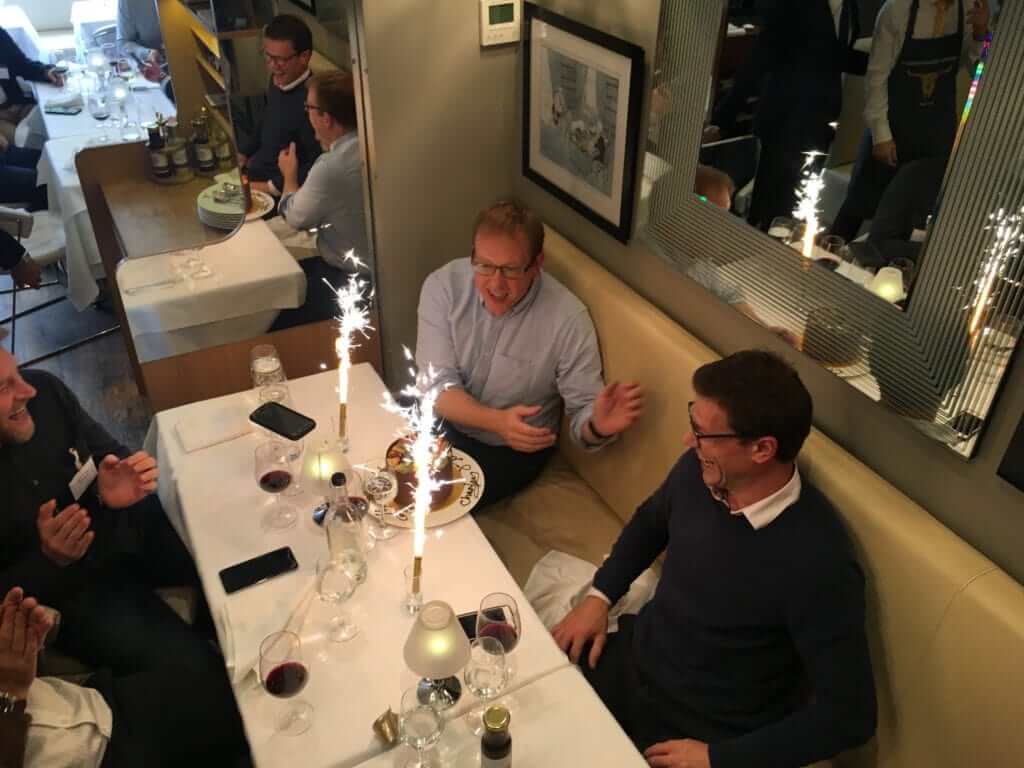
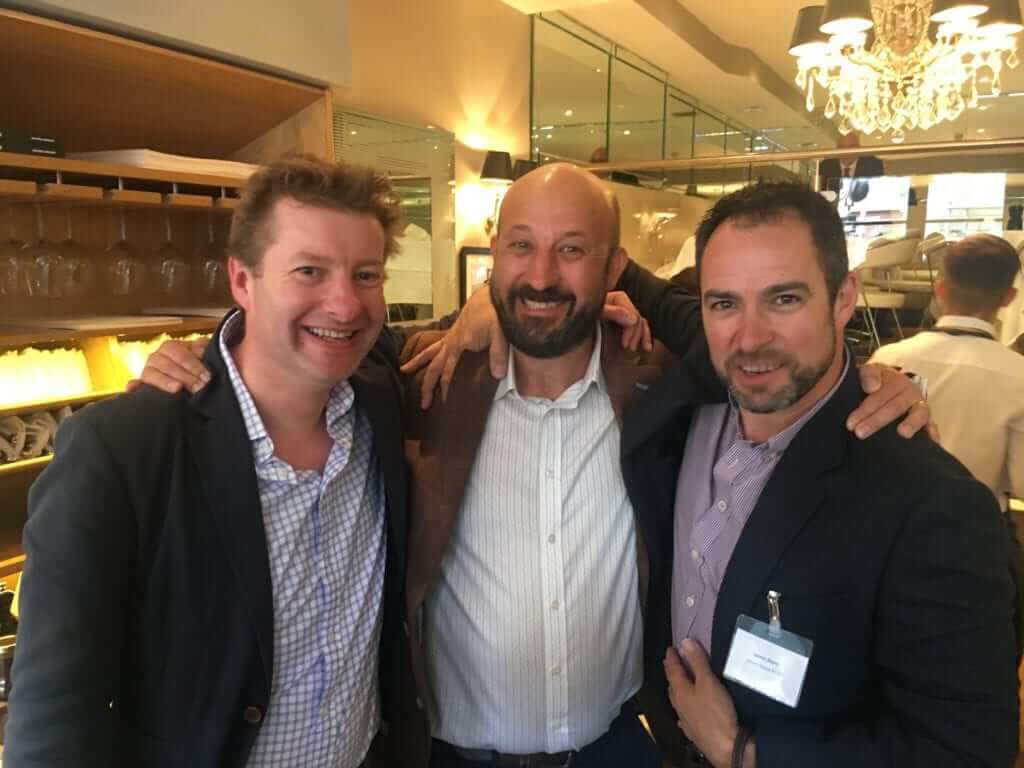
It was an opportunity to tell her about our Club and what’s been happening. For instance the 1990-2000 Reunion Lunch at the the London Steakhouse earlier this month, where as always we were honoured and entertained by the owner of the restaurant, James Robertson (E 88-93), and who was able to attend for the first time himself as a guest, being of suitable vintage. This venue, with the year group reunions, is becoming a huge success.
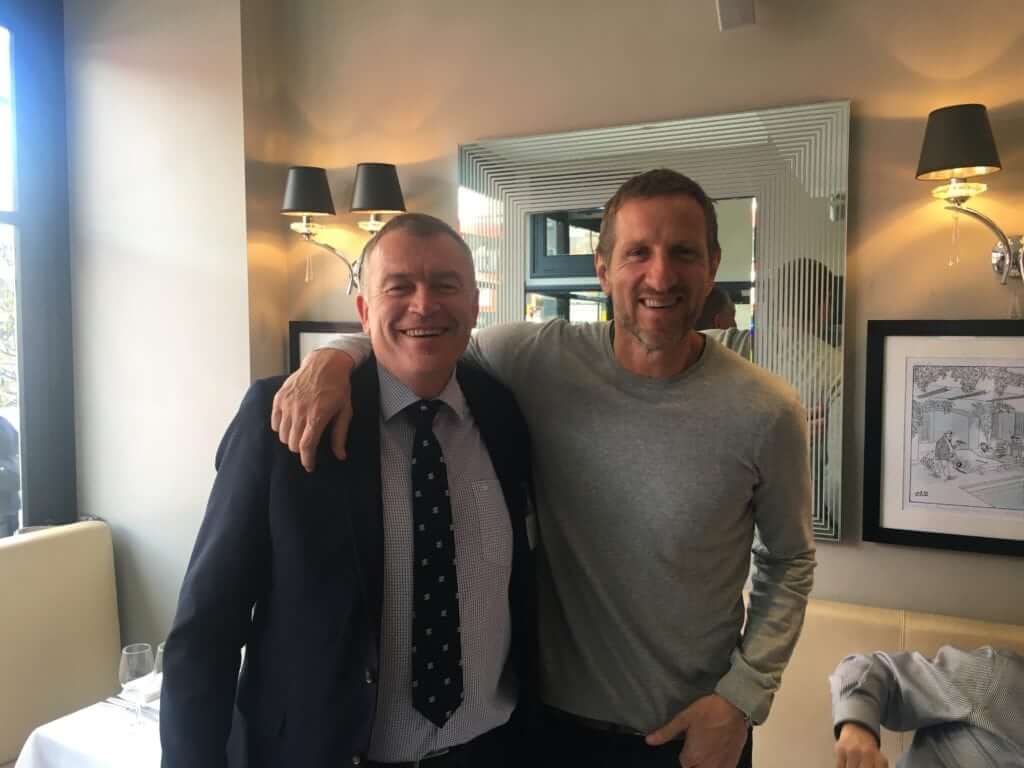
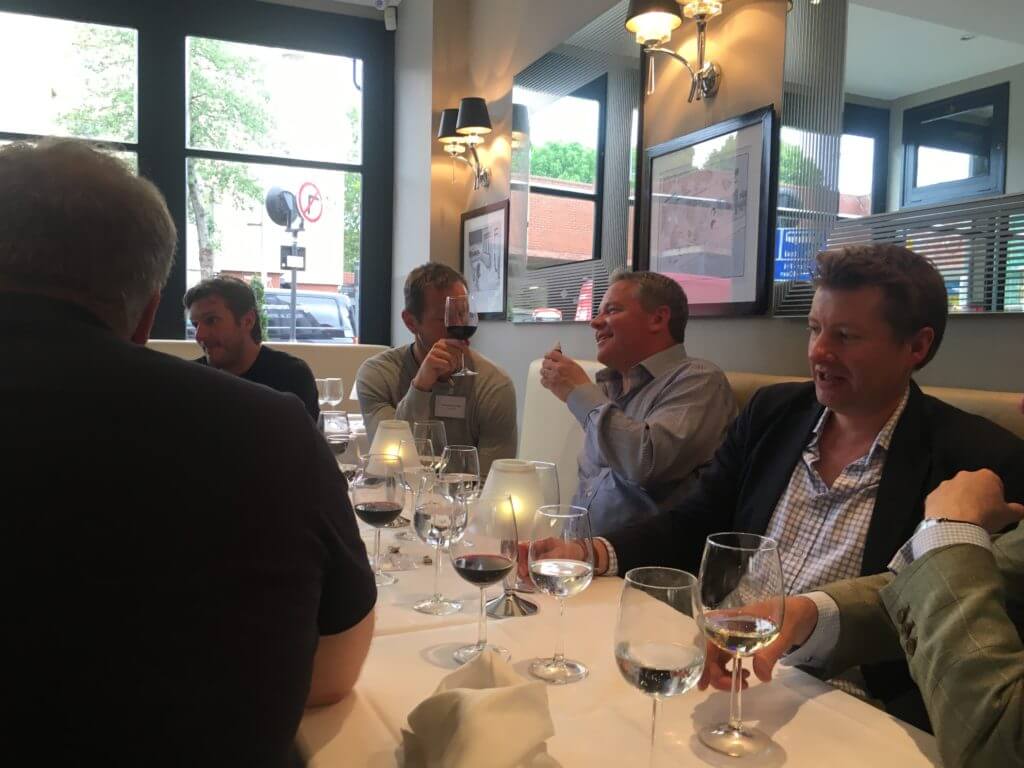
Somehow the intimacy of the place encourages the years to roll away. Soon we’re talking about old times, embellishing stories of our youth, and singing badly to celebrate the two birthdays of the day. Thank you James for a fabulous lunch, and for the excellent hospitality of your staff. And thank you to John Guthrie (H 50-54) for his generous donation to the event. It was much appreciated by all.
Perhaps not directly associated with the Club was a the retirement dinner of Richard Witt who has held the post of Foundation Director since 2006. I, we, have worked with Richard for many years. He has worked diligently and tirelessly. He has been inventive and creative in finding ways to raise money for the Foundation and therefore the School. Most of all he has worked with integrity and which has served to underpin the trust that people have in him. All important in such a role.
The School, like all such institutions needs a Foundation. It provides funds where major projects cannot be supported by fee income alone. The success of the Foundation is largely down to Richard and as such he leaves a tremendous legacy. I know he is not quite leaving us yet but on behalf of the Club, well done, and thank you. We offer our full support to Isabella Bennett, the new Foundation Director, and to Andrew Fleck and the School as they continue to raise funds in anticipation of the 500th anniversary of Sedbergh School.
So, back to my doctor. I limped away with a clean bill of health, knowing that my reflex in my now stiff knee was in first rate order. I was therefore given the all clear to travel to Sedbergh this weekend to watch the County Cricket match. It’s a first for Sedbergh. Good luck to Dan Harrison and staff. I hope for warm weather, cold beer, and first-class cricket.
Cheers all,
Jan van der Velde
Chairman, OS Club
Lauren Crowson (L 05-10) recently became a world champion long-range rifle shooter with the rest of the GB U25 rifle team. She joined the Sedbergh School shooting team in 2005 and became Captain in her last year. Selected as an Atheling in 2010, Lauren was then selected to shoot in a GB U25 match while on the Athelings tour and achieved top score. Representing the GBU19s against South Africa in 2011, she travelled again to South Africa with the GB team in 2012. She now shoots for Yorkshire and won the Alexandra trophy at Bisley last year, competing against just under 1,000 other shooters. Lauren studied Business Management at Lancaster University and was awarded a BSc (hons) degree. She is now Operations Manager at Mackenzies Smokehouse, managing the shop, restaurant and factory, and 35 members of staff. “The lasting memory of my first week at Sedbergh was standing outside the sports centre being offered the chance to try shooting on the indoor range.

Before I knew it I was lying behind a small bore rifle, propped up on a sandbag, aiming at a target. I attribute my current success at Shooting to those early days. I firmly believe that establishing good foundations at any activity allows you to push yourself and achieve so much more in the long run. Sedbergh was that foundation. I had access to a great indoor range, the best equipment and the help of an experienced shooting coach. Had I been at any other school, balancing shooting with music and academic work would have been an impossibility but Sedbergh is no ordinary school. I was able to pursue all of the activities whilst not affecting my academic career. It’s only when I look back at how it all started, on the steps outside the sports hall, and where I have come from that moment, that I come to think of Sedbergh as the backbone to my success at Shooting.”
Alistair Gourlay Biggar, from Dalbeattie in Kirkcudbrightshire, though born in Edinburgh, entered Sedgwick House, Sedbergh in 1960 from St Mary’s Prep School, Melrose, and remained a lifelong Melrose supporter. His cousin, Mike Biggar (S63-68), arrived at Sedbergh also from St Mary’s in 1963 and went on to gain his Blue at Cambridge University, and play for and captain London Scottish and Scotland. Alastair came with strong rugby genes, his father Ken, also a Sedberghian, was in Sedgwick House (33-37), playing on the unbeaten 1936 XV as a strong running centre who later played in the Scottish Inter City matches. His uncle was the redoubtable W I D Douglas Elliot who captained Scotland in the post war era between 1947 and 1954.
Alastair was an outstanding sportsman whether on the fives court, on the cricket square, where he gained his 1st XI Cricket Colours, and on the athletics field, where he broke the 110 yard hurdles record. But it was on the football field that his natural athleticism found fullest expression, as an immensely talented rugby player, with a searing sidestep, wonderful hands and an ability to beat his opposite number with guile, acceleration, or a bewitching dummy. At Sedbergh he was coached by the mercurial Welsh fly half, Alan Barter (Cardiff and Cambridge University), and played two seasons on the Sedbergh XV. In the 1964 side he partnered A K Bruce-Lockhart (SH60-64) in the centre, with John Spencer at fly half, a future England centre and with whom he later toured New Zealand with the victorious 1971 Lions. Sedbergh narrowly suffered a single defeat in his final season, to an excellent Dulwich College side. He played for a strong London Scottish Schoolboys side with Colin Telfer at fly half, who beat Richmond schoolboys 57 – 0.
Leaving Sedbergh in 1965, he went to Shuttleworth Agricultural College, in Bedfordshire, and joined London Scottish, with whom he played for 10 years. He joined a celebrated back division boasting six Internationals. There he played as a 19 year old in a Club style which encouraged his naturally creative flair. He played in a final Scottish trial within a year of leaving Sedbergh, but had to wait until 1969 for his first cap, which was against South Africa at Murrayfield, a match which Scotland won 6-3. But for injuries he would undoubtedly have won many more international caps than his 12 International appearances between 1969 and 1972, which included a double triumph over England in 1971 at Twickenham and a week later in the Centenary match at Murrayfield. He was a member of the victorious 1971 British Lions touring party to New Zealand, which still remains the only Lions side to win a Test series in New Zealand. He played 10 times on the tour, and scored 9 tries on the wing, including a hat trick against Marlborough/Nelson’s Bay.
He later went into the City as a foreign exchange broker, and lived in Jersey with his wife Christine and three children. He died on 6th February 2016 after a long battle with cancer at the relatively young age of 69, and we extend sincere sympathy to his wife and family at their untimely loss.
The funeral on Wednesday 24th February in Cern Abbas Church, near Dorchester was a very fitting tribute to Alastair’s marvellous life and was extremely well attended. A large number of OSs were present at the service to pay their respect to a truly great Sedberghian.
There was also a small group of OSs, which included three of his fellow Sedbergh 1st XV team members, John Spencer, Richard Birtwistle and Neil McKerrow who weren’t able to make the funeral near Dorchester, but met and gathered in a huddle at 12.30 on Wednesday 24th February on the centre line on Buskholme to share a few memories of him. It was a gloriously crisp, sunny afternoon with Sedbergh looking at its very best, conditions would have been just right for Alastair! We felt he would have appreciated it, especially some of the stories that were shared.