
Interview with OS Mark Herman: Screenwriter and Director
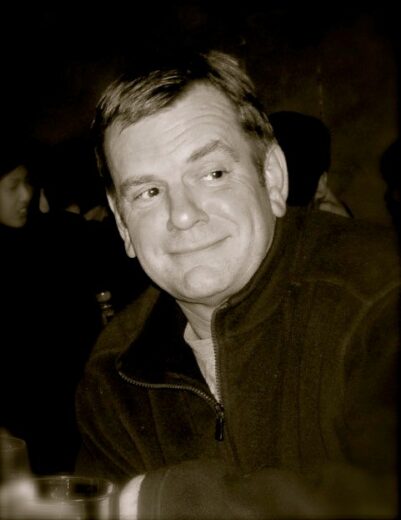
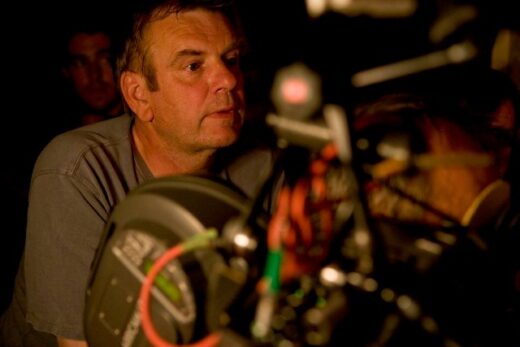
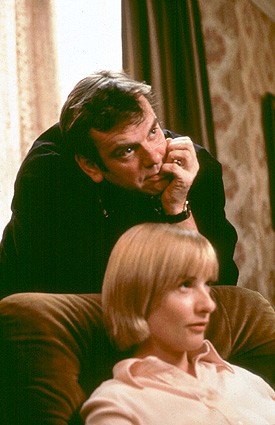
Mark Herman (H 68–73) is an award-winning British screenwriter and director, best known for Brassed Off (1996), Little Voice (1998) and The Boy in the Striped Pyjamas (2008). Herman has built a career telling stories that explore working-class life, survival and the resilience of the underdog.
Can you recall why Sedbergh was chosen for your schooling?
That’s something my brothers and I have often wondered about over the years. We were football-mad, so a school known for rugby might not have seemed the obvious choice. I know my parents were very taken with the spectacular setting and the welcome they received on their visit. In particular, they were impressed by the then Housemaster of Hart House, Mr Madge, who unfortunately retired just before I arrived. But those early impressions clearly mattered.
How much provision was there for creative arts during your time at Sedbergh?
Back then, there was no structured art education, just the chance to dabble in ‘hobbies’. But I do remember the art building and occasional encouragement from staff, including the moustachioed art master, Mr Inglis.
A much clearer memory I do have is seeing one guy, a contemporary from Winder House, fill up an entire wall with an enormous collage of cut-out newspaper shreds depicting the famine in Biafra. It was spectacular and obviously very memorable because it has stuck with me all this time. He was called Chris Bjelland and amongst his achievements he became the chairman of The National Museum of Art in Norway.
Tell us about your path after leaving Sedbergh School.
I went on to take a BA in Graphic Design at Leeds Polytechnic in which I applied to study various options including illustration, graphic design and printmaking, but I had hardly shone brightly in my first year and, quite reasonably, none of those departments wanted to take me on! It was only a man in charge of the film department, a brilliant tutor called Adrian York, who was willing to ‘take the risk’. There have been a couple of times in my education and career when a specific teacher, tutor or mentor made all the difference – offering far more belief in me than I had in myself – and were the reason for me battling on rather than giving up. I had assumed I’d end up somewhere in the artistic field by the time I graduated; I just hadn’t expected it to be in film.
You went on to study at the National Film and Television School alongside Nick Park, creator of Wallace and Gromit. To what extent did your experience working alongside other filmmakers inspire your own student projects?
I’d initially applied to study animation, but working alongside talents such as Nick Park quickly made me give that up. I was so far behind in that respect that I couldn’t imagine how far behind I’d be in the real world. I spent only a few months in animation – including a couple of weeks adjusting the sunglasses of the mice in A Grand Day Out – before switching to live action.
I first shot a documentary, then moved into screenwriting, which I enjoyed thoroughly. The film school at the time was seriously unstructured: you essentially had free rein to get on with things yourself. I learned mostly by instinct, paying close attention to which films I liked and, more importantly, working out exactly why I liked them – what the tricks were that triggered me. Looking back, it’s fair to say I was largely self-taught, and that learning continues to this day.
After graduating from the NFTS, I had a couple of early projects considered by the BBC, but nothing progressed very far. I did write one sitcom episode for ITV, but “writing to order” wasn’t for me, nor the “writing by committee” it tended to become.
Obviously, my screenwriting career has always involved script editors and all and sundry putting forward views, but I have always managed to retain some control as sole writer, and that freedom usually leads (I think!) to a better finished product.
Your film Brassed Off was both critically acclaimed and joyful to watch. What inspired you to write it?
My first feature film – a Dudley Moore comedy – had bombed critically, and for a while agents wouldn’t touch me with a bargepole. It was hard trying to get the next film off the ground.
The best advice I’ve ever been given, and advice I now pass on to young writers, is not to worry about an audience, but simply to “write something you care about”. It took me a long time to find such a thing, but it happened one day in the early 90s when a roadworks diversion took me through the South Yorkshire coalfields, through pit villages I’d known a decade earlier when I worked as a travelling rep. The shops I used to sell bacon to were now boarded up, and the communities looked like ghost towns. Like everyone, I’d followed the news of the miners’ strikes, but I hadn’t really understood the effects of the government’s pit-closure programme. These communities had been destroyed. That sparked something for me.
A week later, on another drive, I heard a radio story about a brass band in the North East having to close because of a lack of subscriptions, and I married those two threads together to form the story. That’s not to say my advice to budding writers is to sit in a car and wait – I’m afraid it isn’t quite that simple!
Perhaps your most famous film is The Boy in the Striped Pyjamas. What motivated you to explore such challenging subject matter?
It’s interesting how dusty memories of Sedbergh kept resurfacing during the planning of that film. People were, quite understandably, concerned not just about the PG rating, but about whether children would recognise the story as a fable rather than an accurate depiction of the Holocaust.
My own introduction to the Holocaust, common back in the 60s, was brief and cold: horrible facts, huge figures, all very text-driven. It wasn’t until an English teacher at Sedbergh, Mr Barter, dropped a book on my desk called Things That Matter, which included a photograph of the aftermath of a gas chamber, that it began to sink in. Rather than the facts and figures, it was the power of that image that truly shook me.
As I researched for the film, many present-day educators seemed to suggest that the way the Holocaust is taught in schools hasn’t changed all that much. My intention, therefore, was to reach young viewers emotionally – to pull them in by the heartstrings, leaving their heads wanting to find out more.
I suppose I always knew the film might upset or annoy some people with its unrealistic narrative, but I also knew that if it was embraced as the fable it was intended to be, it could encourage children to learn more. The goal was to make a family film in the truest sense – one the whole family could watch and discuss afterwards.
It reminded me that, in any list of the most influential teachers in my life, Mr Barter had to be included.
Did being a writer change how you approached directing?
I’ve never done anything other than both write and direct. It helps in that as director, you know (or at least you should know!) exactly what the writer intended with every line. I don’t think I’m a control freak, but as writer-director you do have the ability to tweak both roles: even as late as on set you can re-write a scene on a whim.
As well as writing for the screen you have also written lyrics. How does the process of song writing differ from screen writing?
Lyrics have always been a hobby, a diversion. Screenplays can take years and countless drafts, whereas songs – if you’re lucky – can come together in minutes. Songs feel more like quick fun puzzles; I don’t eat, sleep and breathe a song like I do a screenplay. It’s much more of a fun, relaxed process as well.
You often feature ‘underdog’ or unheard characters in your writing. Has it been a conscious priority to provide a voice to marginalised groups?
That hasn’t been a conscious intention, though the battle of the underdog is always an attractive narrative for me to explore because there’s always uplifting drama in there. Someone recently pointed out that most of my films explore ‘father and son’ themes – Brassed Off, Little Voice, Purely Belter, The Boy in the Striped Pyjamas – and I’d never realized I was doing it. It’s certainly not conscious. It’s alarming how often people explain to you what you’re doing. So thank you!
It has been ten years since your last major screenwriting project, do you still write?
Over the last decade, alongside a growing disillusionment with the industry I have also had quite a battle with health, the big C included, which has meant I’m unlikely to take on new directing projects. However, I have carried on writing and am currently working on a screenplay about the comedian Spike Milligan and his battles with mental health. At over 70 I’m not as hungry as I once was, and I’m pickier, so the project has got to be the right one.
What advice would you give to aspiring screenwriters?
I always go back to a quote I saw from the comedy writers Galton & Simpson: “Don’t get it right, get it written”. It’s much better to just get something down, anything, any old rubbish, than nothing. Without being pretentious, screenwriting is a bit like pottery – you hopefully end up with something beautiful, but you’ve got to start by chucking a whole clunky ugly chunk of clay onto the table. Don’t worry about it, don’t angst about it, just write. I’ve spent an awful lot of days deleting more than I wrote. And also, I’d go back to what I mentioned earlier: it helps to not to worry about bums on seats, but instead just write about something you really care about.